
With Operation Epic Fury now one month underway, we have felt the impact of increased oil prices and the near closure of the Strait of Hormuz. This critical shipping chokepoint lies between the UAE and Iran and is responsible for roughly one-fifth of the world’s oil flow. Daily shipping through the Strait of Hormuz has fallen by an estimated 90%. As a result, oil prices have increased more than 50% above pre-war levels. With higher shipping costs, maritime insurance premiums, and oil prices, we expect to see downstream inflationary effects. Markets have reacted to these factors, with the S&P 500 declining approximately 7.4%.
Should I be worried about geopolitics?
Personally, as a Global War on Terrorism veteran, I believe that every American should be informed about geopolitics while maintaining a healthy dose of skepticism regarding the reasoning for engaging in lethal conflict. Staying informed by watching the news or keeping up with social media often amplifies unease, anxiety, and fear about the future.
In times of turmoil, a healthy approach is to ground yourself in the things that matter most: your faith, family, friends, and the personal connections associated with each. From a financial planning standpoint, Next Bloom Wealth works to ground our clients in their long-term, comprehensive financial plans. We recognize that markets will not always be positive and expect near-term volatility to continue. Our clients’ long-term financial plans provide perspective beyond present-day market swings. Looking ahead, we stress-test various market environments to determine whether adjustments are needed, or whether opportunities created by down markets should be considered.
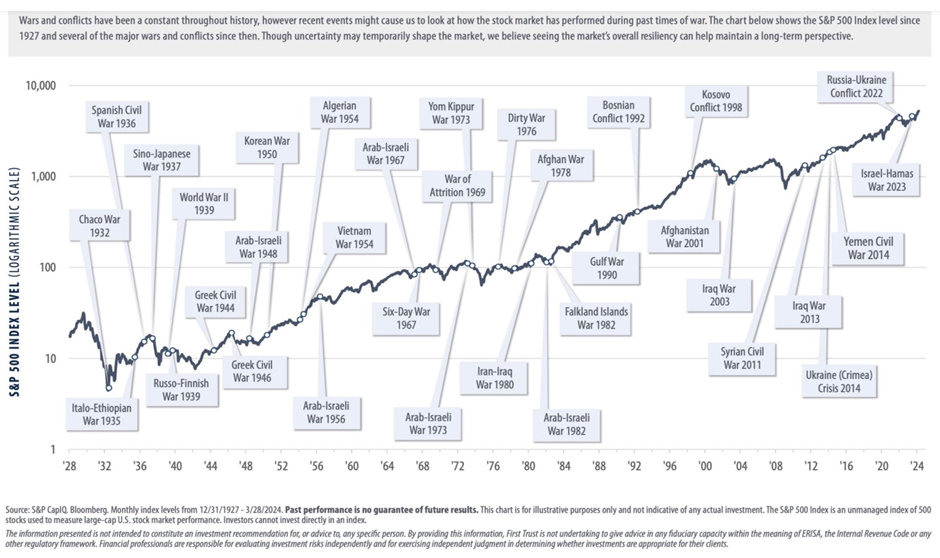
Historically, since the dawn of the modern stock market, we have experienced wars and geopolitical conflicts. According to Deutsche Bank, the average market decline across 30 major geopolitical events since 1939 was just 4%, and recoveries were generally swift. The graph below illustrates the long-term growth of the S&P 500 with an overlay of major geopolitical conflicts.
Looking at geopolitical crises more broadly, we see a consistent pattern of shock followed by recovery. As we like to say, “when in doubt, zoom out.” Note the “Ten Years Later” column on the far right. While we can’t guarantee outcomes, we do expect that 10 years from now this period will appear as a relatively small blip in your long-term portfolio history.
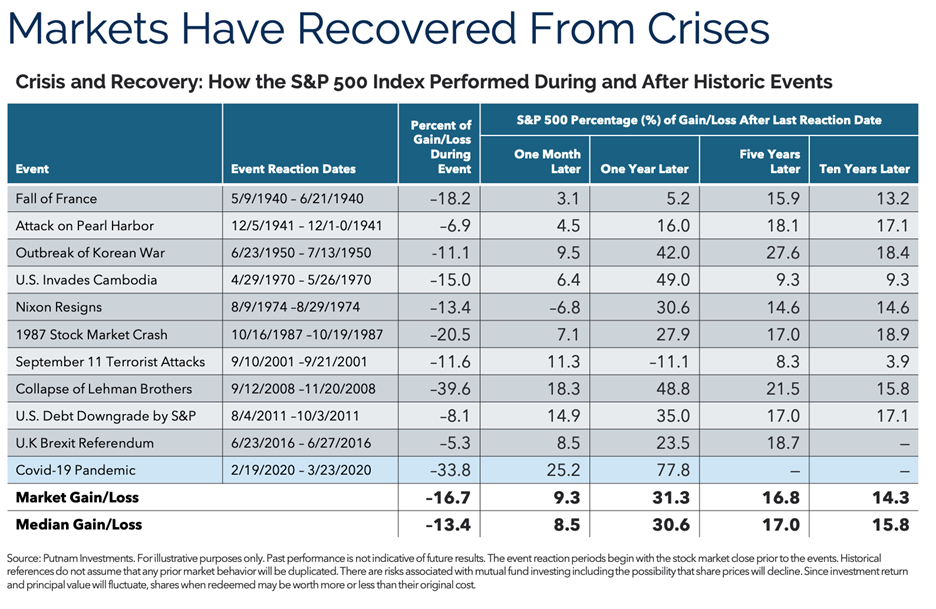
When Russia invaded Ukraine in 2022, the S&P 500 initially fell roughly 10% but recovered within six months. In 2025, markets experienced a short-term shock from tariffs, followed by a strong recovery a few months later. Looking at the four great bear markets of the past century (the Great Depression, the 1973–74 oil embargo, the dot-com crash, and the 2007–09 financial crisis), these events were significantly more damaging to global stocks than either of the world wars. This is partly because modern U.S. conflicts have largely occurred on foreign soil, with limited impact on the domestic industrial base.
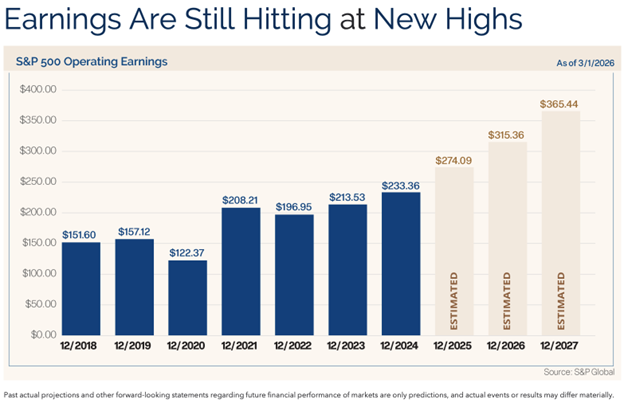
If you examine earnings forecasts for the S&P 500 over the next 12 months, you’ll see that expectations have risen since the initial attacks on Iran. According to LSEG data, earnings expectations are up 3.6%. These are constructive data points supporting a long-term approach to investing.
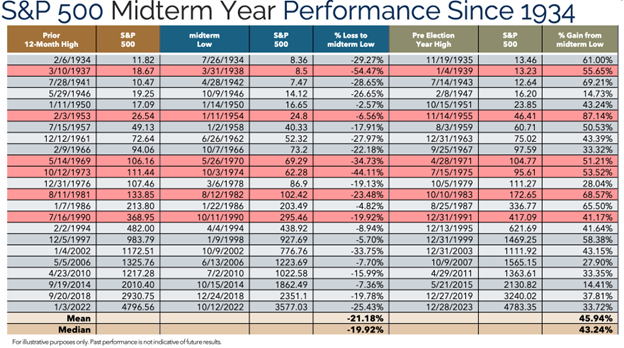
While our long-term outlook remains positive, we expect continued volatility as we approach the midterm elections. There is little doubt that the conflict with Iran will weigh on voters as they head to the polls. Even setting aside current events, historical data shows that midterm elections typically bring heightened volatility, followed by recovery as election outcomes are absorbed and priced into markets.
In periods of uncertainty, fear often drives us to make sudden changes in an attempt to protect ourselves. Unfortunately, market data clearly shows that sudden shifts are often the wrong approach. Research indicates that the more frequently investors monitor their portfolios, the riskier they perceive investing to be, a phenomenon known as myopic loss aversion. When investors constantly check their investments, they become more sensitive to losses than to gains.
A simple (but difficult) solution is to check your investments quarterly rather than daily. More than half of investors check their balances every day, and much like constant news consumption, this habit can become emotionally exhausting. Our recommendation is to “turn it off” and redirect your time and energy toward the relationships and personal connections that matter most.
“This too shall pass.” Ashley and I are here to support you throughout the coming year. We are actively monitoring our clients’ financial plans and investment portfolios to ensure they remain aligned with long-term goals. If you’re not yet a client, please email us at info@nextbloomwealth.com or call (816) 307-0548. We’d love to discuss your long-term plan and explore ways we can add value and deliver peace of mind during this period of geopolitical uncertainty.
Alex Borgardts
Disclaimer: Past performance is not indicative of future results. See the text at the bottom of each illustration.